
Water change is an essential component of fish-keeping. It keeps toxins at bay and replenishes minerals for inhabitants in the aquarium. Specifically, nitrogenous-based compounds are neurotoxins that cause lethargy, skin irritation, and asphyxiation in fish. Most fish breeders in Asia perform as many as sixteen complete water changes per day to grow their goldfish. Make sure to keep the temperature the same. However, it is not known the exact number of water changes you need to perform weekly to maintain a healthy aquarium. Furthermore, it is difficult for someone to tell you how frequently you need to complete a water change because of the differences in the environment since most of us keep small water boxes at home. Fortunately, there are things that you can objectively measure to see if you need a water change. Here are a few tips on how frequently you need to change the water.
1. Measure your nitrate level.
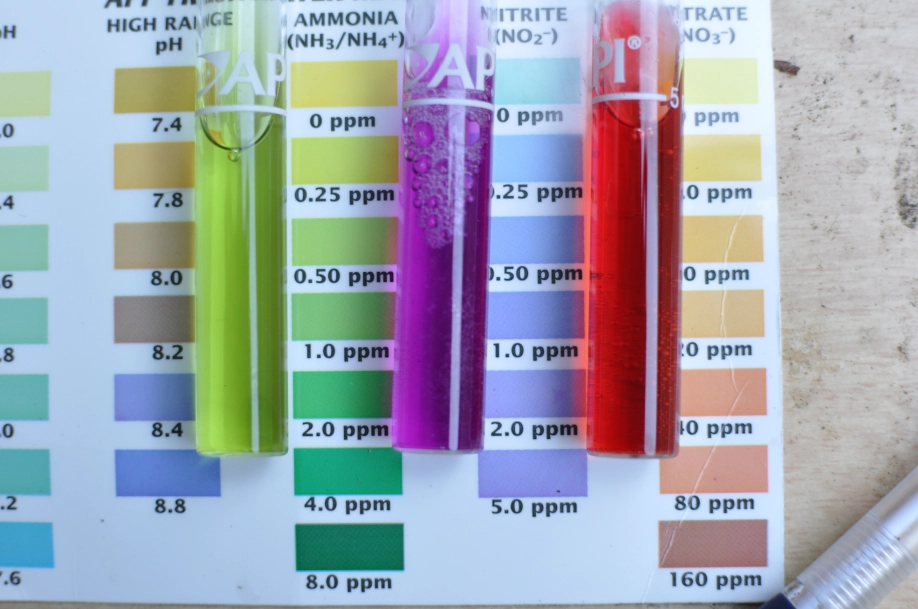
The first suggestion would be to make sure your aquarium is fully cycled. This process generally takes four to six weeks, depending on using commercially available nitrifying bacteria products. I recommend Fritzyme 7 (link below) because I was able to cycle my aquarium in as little as two weeks. It is simple to use, and you only need to follow the bottle’s instructions. To know if your aquarium is cycled, you should have zero ammonia, zero nitrite, and a minimal amount of nitrate. You can test your water with any water test kit, such as the API or the Aquarium Co-op test strips. If you would like more information on the nitrogen cycle, please go to my previous post.
Use nitrate level as a gauge for the number of water changes you need. For most aquariums, this will mean one water change per week. The amount of nitrate is also dependent on the number of fish in the system and how frequently you feed. Typically I would recommend any level less than 40 ppm for most aquarium inhabitants. Other toxins, such as copper and hormones, are not nitrate that is not measured with your test kit. You will need to observe your tank to decide when to perform additional water changes. Specifically, species such as shrimps cannot tolerate this high nitrate level. Thankfully, they are often low nitrate-producing organisms.
2. Use a water change system to get water from your faucet.
Gone are the days when we used buckets and short siphons to perform water changes and gravel vacuum. Instead, buy yourself a siphoning water system such as the Python or the Aqueon water changer. These are game-changers. It will save your back and reduce the amount of time needed to perform a water change. I do eighty percent water change on my 75-gallon tank weekly using a water changer. If I had to carry a bucket, I would have hurt my back.
The water changing system can directly connect to your faucet for siphoning and putting water back into your tank. Therefore, you do not need to carry buckets of water around your house. It reduces water damage to your appliances and flooring. It contains a faucet adapter that effortlessly connects the tubing and transfers water directly into the tank. In addition, I also use a water pump (link below) that can place water now into the aquarium using the same system. It takes about 15 minutes to siphon out water and about 30 minutes to put it back in. Just add the water conditioner directly into the tank. It is straightforward. I also use fine sands as substrate in the aquarium, and therefore there is very little to no detritus that I need to clean. I rarely wash the bottom of the tank because of this. Please do not take out the fish or clean the tank with tap water as it contains chlorine, killing the beneficial bacteria.
3. Start with a once-weekly water change routine.

Systematically develop a water change routine. Start with a once-weekly schedule and see how your fish do. Research thoroughly the requirement of your inhabitants. Start slow with 20 to 30 percent water change and slowly increase the amount in a month. Fish that require more pristine water like the Discus fish and the Ranchu goldfish will require a much higher water change frequency. On some occasions, fish do not do well if they have been in poor condition and then having a suddenly change of environment to pristine water. Their body shuts down. For example, I started my Ranchu tank with a once-weekly water change but noticed that they have issues with growth. So I increased the frequency to twice weekly and now every two to three days. This significantly boosts their development, skin condition, and appetite. You can use the nitrate level or the TDS to gauge how much water you should change. I do not let my water exceed from 120ppm to 150ppm or nitrate level greater than 40 ppm. However, other species such as shrimps cannot tolerate high level of fluctuation and therefore daily water changes are not recommended for invertebrates. In these situations, TDS should be used frequently and do not let water exceeds 50 ppm of their most ideal environment. Remember, consistency is key!
Thank you so much for reading my blog. If you like contents like this, please comment, like, and subscribe. If you are interested in my aquarium products, please use the links below.
Buy my favorite aquarium equipment using the link below:
MarinePure spheres bio-media: https://amzn.to/3M60TTt
MarinePure blocks:https://amzn.to/3l4F8rb
Fluval Biomax: https://amzn.to/3yAGUIy
Bio-media bags (white and black):https://amzn.to/398E5nw
Gold Trace for ranchu goldfish: https://amzn.to/3LG76op
TDS meter: https://amzn.to/3Pi8Rei
My favorite aqua-scaping tools: https://amzn.to/3wFTzc6
Python water changing system: https://amzn.to/3m3xa2e
Frtizyme 7 Denitrifying bacteria: https://amzn.to/3GFtFsr
Water pump for waterchange: https://amzn.to/3zb034h