
A water softener can be essential if you live in an area with hard water. You can use a general total-dissolved-solid (TDS) meter to determine the hardness of your water. Water that has greater than 200 ppm is considered hard. In general, hard water can be found in central and western United States. These areas are rich in limestone and run-offs from the mountains that lack significant rainfall. This results in considerable calcium and magnesium deposits into our water supply. They may or may not cause substantial damage to our health, but it affects our home significantly. After all, this will lead to repair costs and strain our financial health.
1. Calcium deposit damages your pipes and appliances.

It is no secret that calcium and magnesium deposits damage your pipes and appliances at your home. The accumulation of limestone clogs up your pipes and reduces water pressure. Low water pressure is by far the number one symptom of your home. You will notice poor water pressure in your shower and the kitchen sink. This process takes a few years to develop, but if you own a more than a ten-year-old home without a water softener. You most likely have a hard water issue. If it is not improved, backup pressure may build-up, and the pipes may leak and, worse yet, explode, causing significant water damage to your home. You can install a water softening system, which can slowly reverse the damage that has been done. The softened water can gradually dissolve the calcium deposits and flush them down the drain. You will notice a more robust water pressure that leads to fewer plumbing issues at your home.
2. Improves your overall health.

Calcium deposits on your skin can cause significant health concerns. You may experience allergic dermatitis, which is inflammation of your skin due to irritation from chemicals. You may also feel substantial dry skin, worse after taking a shower. This further causes itching and even bacterial infection of your skin. Some even postulate that hard water, in addition to hormonal imbalances, causes acne. Most importantly, water that is rich in limestone can cause kidney stones. Our kidneys do not filter calcium and magnesium very well as we age. Many of these mineral depositions in our urinary system can cause stone formation. Certain medications can also increase the risk of kidney stones, but a combination of hard water, medicine, and a poor diet can further exacerbate a kidney stone episode. If you are suffering from the above conditions, I recommend a water softening system in your home.
3. No more hard water stains.
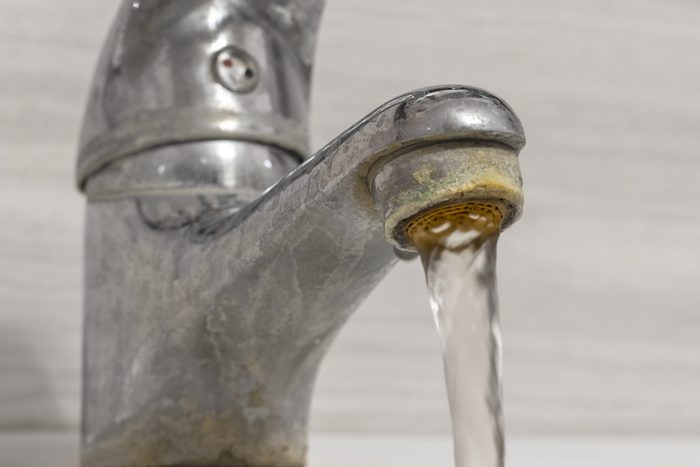
Have you noticed those hard water stain on your faucet? How about those water spots after your wash your dishes? Those are calcium deposits! Fortunately, this is an easy-to-fix problem. A water softening system uses ion exchange technology to help eliminate the calcium and magnesium in your water. It uses sodium, an element that typically does not form limestone after water evaporation. Fortunately, it does not significantly affect your health as the amount of sodium in this exchange process is negligible. In addition, you use less body and dish soap with sodium exchanged water. As a result, you can get rid of the hard water stain quickly when you install a water softening system. Don’t forget! You will have to maintain the system by replacing salt every couple of months. They are inexpensive but does have tremendous benefit to your home.
4. Your fish and plants will love you.

Most aquarium inhabitants cannot tolerate high calcium carbonate in your water. Specific species such as the African cichlids do thrive in salty water. However, hard water rich in magnesium and calcium contains high osmotic pressure that damages the kidneys of your inhabitants. This results in severe constipation, bloating, and dropsy in fish and shrimps. Species prone to swimbladder disease like goldfish may also suffer from extreme water hardness. You can measure your TDS with a meter, and if it is above 200ppm, you do have hard water. To counter this, a water softener can reduce the calcium content in the water via ion exchange. This does not reduce TDS, but it does switch the calcium to sodium in the water. Most aquatic inhabitants are more tolerant of sodium than calcium. The lower calcium content does increase their longevity. Furthermore, if you want pristine water, consider using a softened water in combination with a reverse osmosis unit.
If you are interested in a water softening system, here are some of the products I use,
Buy the best water softener salt here: https://amzn.to/3NaToLa
Buy this water softening system if you want to DIY: https://amzn.to/3NduDOr
Buy hard water stain remover here: https://amzn.to/3FNqT3y
Measure your water hardness with my TDS meter: https://amzn.to/3Pi8Rei