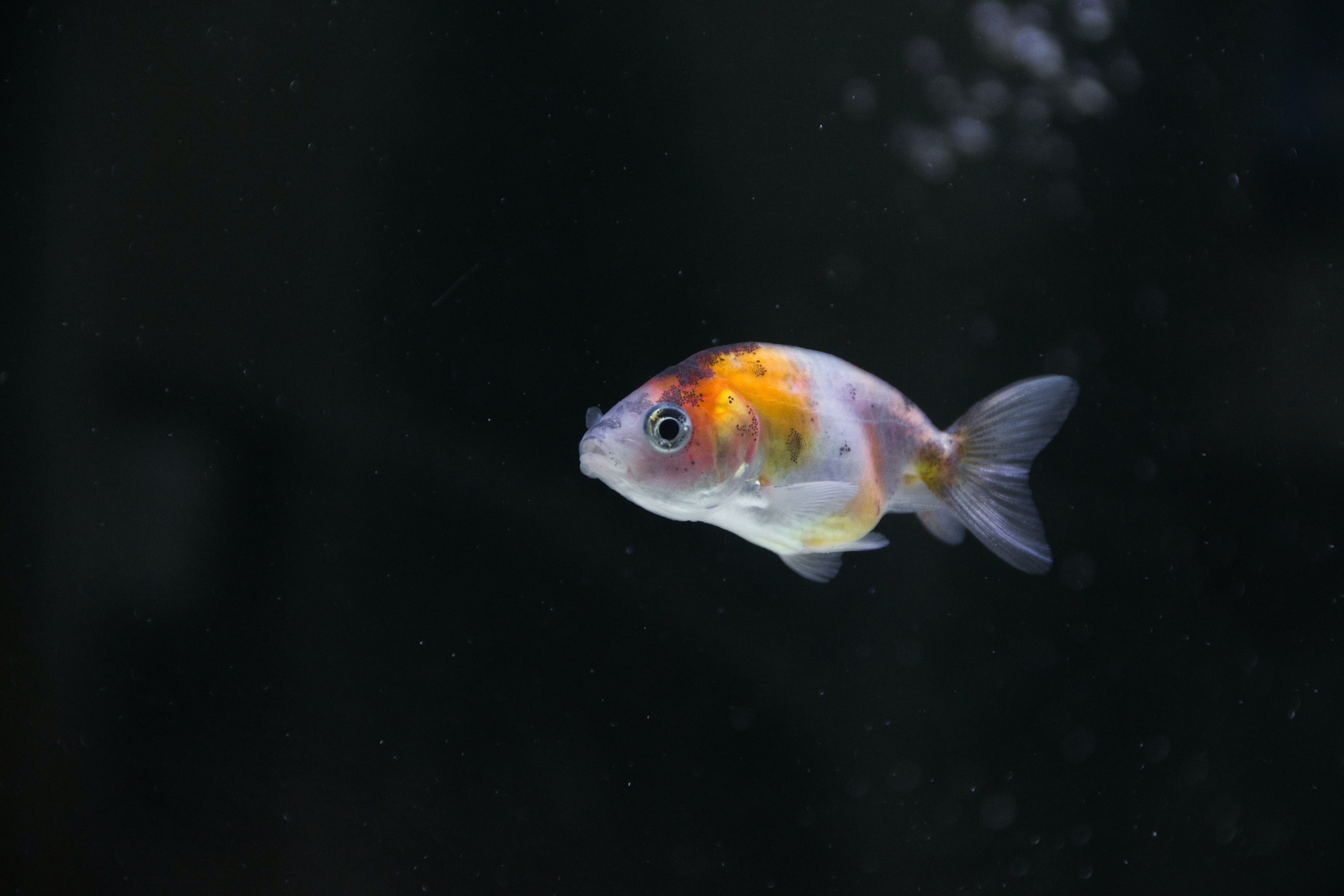
The ranchu goldfish is one of the most highly sought-after fish in the goldfish kingdom. High-quality ranchu goldfish are challenging to find, especially in the United States. There are many importers in the states that help us obtain these gems. However, they can cost a fortune. An average 6″ adult ranchu goldfish with a good body shape can cost 600 dollars. Specific patterns such as the snow leopard or milk cow variants can even be 1000 dollars. Depending on what you are looking for, ranchu goldfish are also very different. It depends on where these fish are coming from. In general, large exporters are from China, Thailand, and Japan. There are smaller exporters from Taiwan, Singapore, and Indonesia. Each area of the world specializes in different types of ranchu goldfish. In general, the overall care of the ranchu goldfish is slightly different than tropical fish like the guppies and the betta fish. However, you can also be a successful ranchu goldfish keeper with some research.
1. Body structure

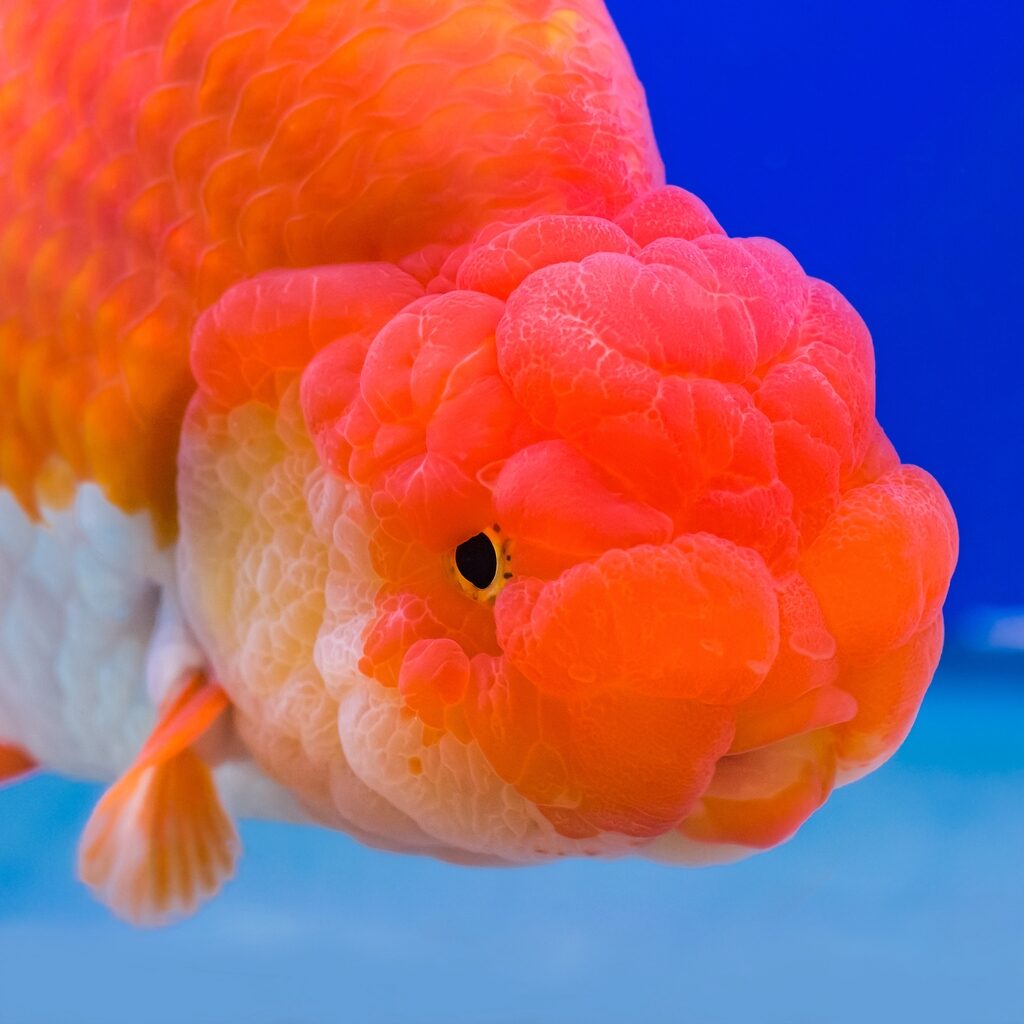
Like many other fancy goldfish, the ranchu goldfish has an overall egg shape. Look at the photos above. The ranchu goldfish lacks a dorsal fin, and it has a relatively small pectoral fin. Male goldfish generally have a more significant muscular back, and female goldfish have a giant belly. A good ranchu goldfish should have a smooth back with an angle between the tail and the body at about 90 to 120 degrees. Ranchu goldfish, in general, have a large wen, which is head growth. Lionchu, a sub-variant of the ranchu goldfish, has a very large wen compared to the regular ranchu. Depending on the breed of the ranchu goldfish, some breeders may select a more rounded body shape. This will allow the viewer to see a more full and chubby goldfish when looking at the aquarium from the side. On the contrary, Japanese breeders tend to select ranchu goldfish based on their wens and fins. Because they look at their goldfish from a top-down view, such as a pond, they actively look for fish with squared heads and long flowy fins. For most hobbyists in the States who keep their aquarium inside a home, I recommend buying goldfish from China or Thailand because their breeders look for a more rounded shape, which fits our setup for a home aquarium.
2. Temperament
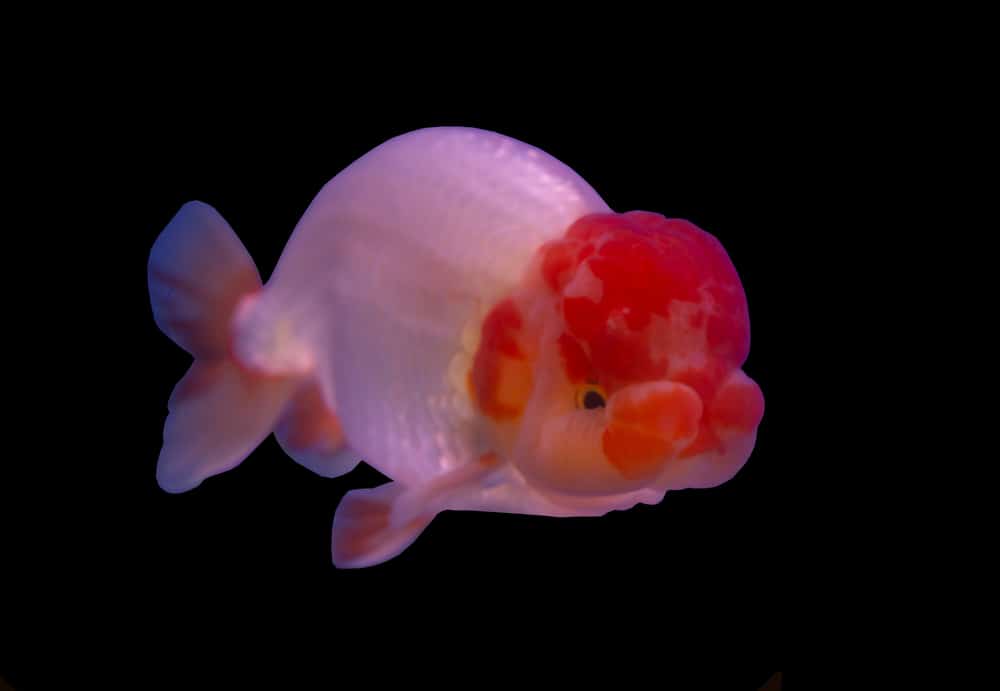
The ranchu goldfish has the best temperament. Unlike its cichlid counterparts from the African rift lakes, they are very docile and easy-going. They are not very territorial. Like other goldfish, they do not harm each other. Occasionally, they may nip at each other in an accident. However, they are also very clumsy and are easy to harm themselves. Sometimes, they exhibit breeding behaviors when they become sexually mature, which happens in about six months to 1 year. The males will chase the female to knock out the eggs inside her. And then, they will secret their sperm into the water and fertilizes those eggs. Because of these behaviors, I do not recommend having any decorations in the tank. I also recommend an all-male or all-female ranchu goldfish tank. I prefer an all-male tank because they do not spread their eggs, which may pollute the water quality. Ranchus love to sieve through the substrates at the bottom of the tank. Any uneaten food or eggs will be cleaned up very quickly. Be careful if you have other inhabitants such as pleco as they may starve in this environment. I recommend a layer of fine sand so they can actively look for food that is trapped inside the sand.
3. Water parameters
The ranchu goldfish is not picky base on the water parameter. However, they are susceptible to the number of nitrates in the water. I do recommend keeping them in warm water at 78 degrees Fahrenheit. Despite being a “cold-water” fish, they are heavily bred in the Asian countries and are not very tolerant of a considerable fluctuation in its surrounding. Regarding the water chemistry, 0 ammonia and 0 nitrites are a must. I find that keeping nitrate less than 10-20ppm is the best for these creatures. They tend to make a big mess when it comes to feeding. Feed them with bottom sinking food to avoid swim bladder issues. They also pollute the water very quickly. If you watch any Asian breeders on Youtube, they would recommend 80% water change twice weekly to keep them thriving. I have the most success when I do 50% or more water changes every two to three days.
The ranchu goldfish cannot tolerate high salt content in the aquarium. They do not thrive well as they may eventually develop swim bladder disease, severe constipation, and other skin conditions. I have attempted breeding them in water with very high calcium and magnesium content. I recommend water with TDS of about 100-150 ppm or softened water. It would be best to aim for a pH of 7.2-7.8. Ensure there is no chlorine in your water and filter your water with a three-stage RO unit. You can also supplement the ranchu goldfish with a gold trace made by Seachem. It provides an adequate micronutrient to the fish. The link is at the bottom of this article. Overall, consistency is critical.
4. Color variations
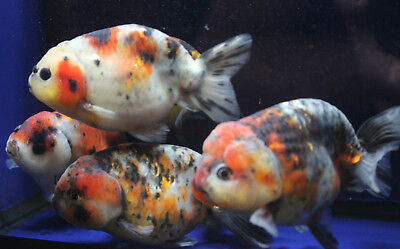
As mentioned before, there are so many variations of the ranchu goldfish in terms of colors. There are red, red/white, sakura (white/pink), calico (tricolor), milk cow (black/white), black, silver, and purple (maroon red). Red/white is easier to find as their genes are stable. The availabilities of the colors also determine their price. They are more readily available as they are in mass production. In general, these fish are produced in Asia, and they are shipped to the United States as we have limited fish farms here in America. The price is therefore tripled or quadrupled when we purchase them here. On the contrary, purple and snow whites are difficult to find. The breeder has to go through thousands of selections and get rid of those with poor qualities and genetics before they can call a ranchu goldfish a purple or snow-white. On top of that, the market is very tight as everyone is trying to get their hands on them. As a result, they typically are the most expensive compared to others.
The ranchu goldfish is one of the most adorable fish you can own in our aquarium hobby. They are not difficult to keep, and I hope that this guide helps you take care of them. Good luck fish-keeping! If you have questions, feel free to reach out to me.
My favorite goldfish ranchu stores: (no affiliate link):
Goldfish kingdom: https://www.goldfishkingdom.com/
Kingkoi goldfish: https://kingkoigoldfish.com/
Chuchu goldfish: https://www.chuchugoldfish.com/
Goldfish Island: https://www.goldfishisland.com/
Buy my favorite bio-media using the link below:
MarinePure spheres bio-media: https://amzn.to/3M60TTt
MarinePure blocks:https://amzn.to/3l4F8rb
Fluval Biomax: https://amzn.to/3yAGUIy
Bio-media bags (white and black):https://amzn.to/398E5nw
Gold Trace for ranchu goldfish: https://amzn.to/3LG76op