Technology has become part of our daily lives. It is no secret that it has also made its way into our healthcare system. For centuries, we have been recording our medical charts in writing. Gone are the days when we need to write down everything, and now we have to sit in front of the computer to type down everything we have been doing. For healthcare professionals, this is even more important in patient care. Making quick decisions can sometimes be based on how quickly we can locate information on the internet. This is not to say that we should not be knowledgeable about the topic. But it is simply impossible to memorize every detail in every medical condition. In this article, I will introduce these mobile applications to you, which will improve your productivity and the level of your patient care. These apps will boost your productivity and help you on clinical rotations if you are in training.
1. Wiki Journal Club

The wiki journal club app is one of the best tools to learn your medicine. As a resident physician, the wiki journal club app gives you more than enough knowledge on what we do and the things we do in medicine. It gives you a complete breakdown of all relevant trials on patient management of specific diseases. For example, if you are interested in cardiology, it breaks down a well-known trial such as the RACE trial in managing a-fib. It gives you all the small detailed information such as inclusion and exclusion criteria. It also gives you the big picture of how this trial was incorporated into the American College of Cardiology guidelines. And this app gives you all of these trials across the entire medicine. It was a tremendous tool for me as a resident to learn all aspects of treatment while in training. The wiki journal club currently costs 6.99 USD on the app store and is accessible online.
https://www.wikijournalclub.org/wiki/Main_Page
2. MDCalc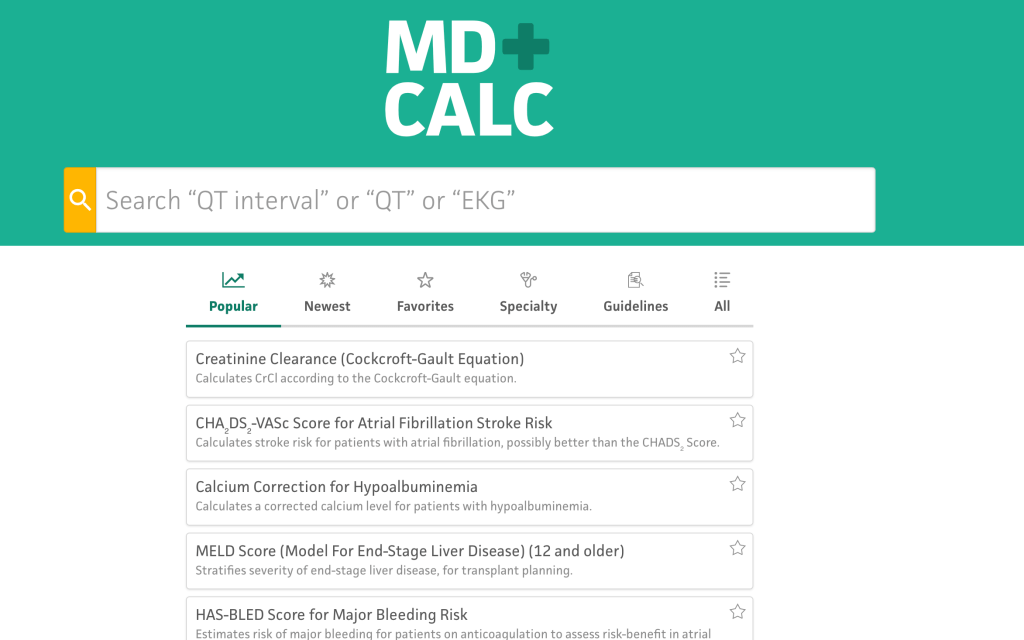
When calculating risk assessment on specific diseases, the MDCalc has it all! It is one of the most common apps that medical students/residents/nurses use to calculate risk assessments in different scenarios. Risk scores such as the CHADSVASC score for anticoagulation in the setting of a-fib, qSOFA score in sepsis, or Lights criteria for thoracentesis. All of these data are stored in this application. It is fast and easy to use, and you will not regret putting it on your phone. I cannot count how many times I have used this app before rounding on wards and in my outpatient rotation. It helps me perform more evidence-based medical management for my patients, and it is by far the most straightforward app for you. You only need to input all the patient characteristics, and you will be able to find out the risk of some medical conditions in about 1 minute. MDCalc is free to use on mobile phones and its website.
3. Uptodate
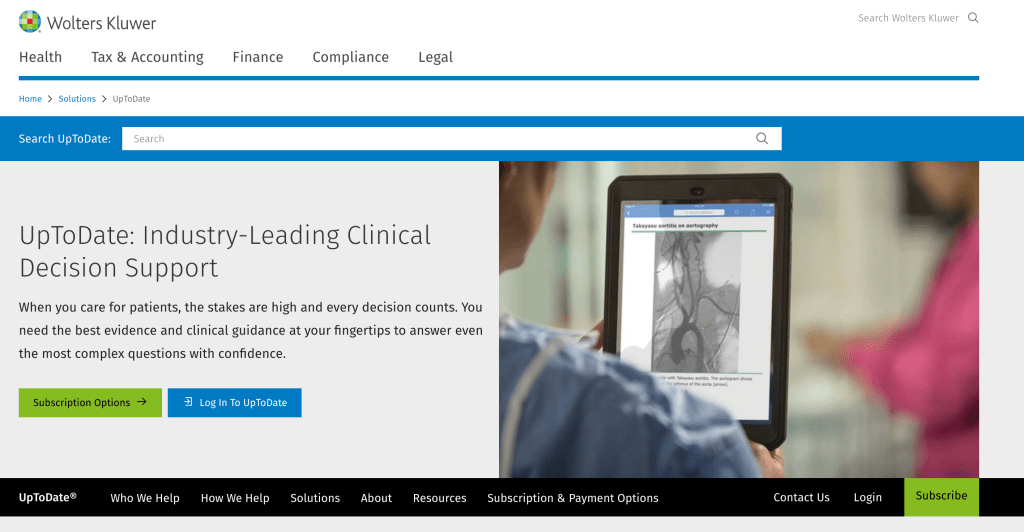
Suppose you are unfamiliar with a specific disease process and are unsure how to treat something. Uptodate is one of the biggest secrets for healthcare workers. You will most likely encounter its green banner when visiting a medical provider’s office. Although we are discouraged to use this website in front of the patient, we don’t know every disease processes and how to treat them. Uptodate allows us to quickly search for evidence-based medicine and know exactly what to do in a specific situation. Unfortunately, medicine changes daily, and it is sometimes challenging for providers to catch up with the most up-to-date material, even with the yearly continued medical education. In my residency training, I use up-to-date almost every day, in conjunction with primary literature published in reputable sources, to treat all of my patients. I believe evidence-based medicine should be the basis of medical therapy, and we should only treat patients with medicine that have been proven to alleviate suffering and minimize medication side effects. Uptodate costs 58 dollars per month for professionals and is free for college/medical students. The mobile app will need a personal subscription activated before it can be used.
https://www.wolterskluwer.com/en/solutions/uptodate
4. Haiku

The epic app is one of the most convenient apps that healthcare providers can get if you work in a hospital that uses Epic as an electronic medical record system. It allows you to chart check on the go, enter in order, and review patient results in a heartbeat. It also lets you review radiology reports and dictate medical records as long as you have a mobile phone. It adds convenience for professionals that have to work in multiple hospitals and do not have a computer nearby. It also allows quick access and patient review for physicians and nurses. This speeds up medical management plans and avoids delays in medical care. During residency, I would check on my patient lab results constantly at home (I know, this is bad). But it allows you to speed up your work progress, and it will enable you to quickly check on patients without logging on to computers in the hospital, which can be extremely slow at times. Haiku is free to use on mobile phones and computers. It does need configuration from your hospital before using it for patient care.
5. Doximity
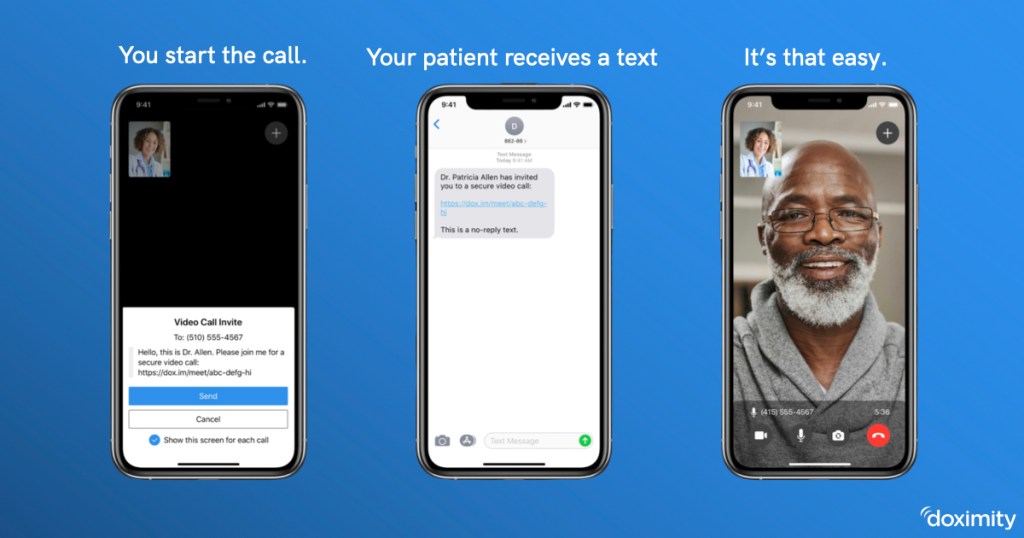
Last but not least, one of my favorite apps is the Doximity app. This is not an advertisement, and I do not get reimbursed by the app company. However, it is one of the best apps as it allows you to contact your patients without exposing your cell phone number. It also has the function of faxing documents between users to a fax machine, which lets you send and receive medical records in a HIPPA-compliant manner. I use Doximity to read relevant medical news, connect with other medical professionals, and contact my patients about their laboratory results. I also use Doximity to place consultations, discuss patient care, and communicate with the patient’s family. Doxmity is free to use, but you must verify your medical credential before its use. Once you are verified, you can make as many phone calls as possible.
Thank you so much for reading. In conclusion, you should have all these apps installed on your phone to simplify your day. If you are a medical student/resident, you should download these apps because they will boost your ability to locate information and facilitate patient care quickly. If you have a favorite app that I did not mention, please comment down below.
For my list of self-improvement items, check out the books that I recommend,
Rich Dad, Poor Dad: https://amzn.to/39d33lT
The 7 Habits of Highly Effective People: https://amzn.to/3M7JM3K
The Emporer of All Maladies: https://amzn.to/39Gj2ca
Gifted hands:https://amzn.to/38kp1mL
The Power of Habits: https://amzn.to/3MpwHmk
Cook County ICU Interesting Cases: https://amzn.to/3lgzpPp
For USMLE step exam prep books, I recommend:
First Aid Step 1: https://amzn.to/3lyKxXR
First Aid Step 2 CK: https://amzn.to/3G9eYNM
Master the Board Step 3: https://amzn.to/3ly5uCiA