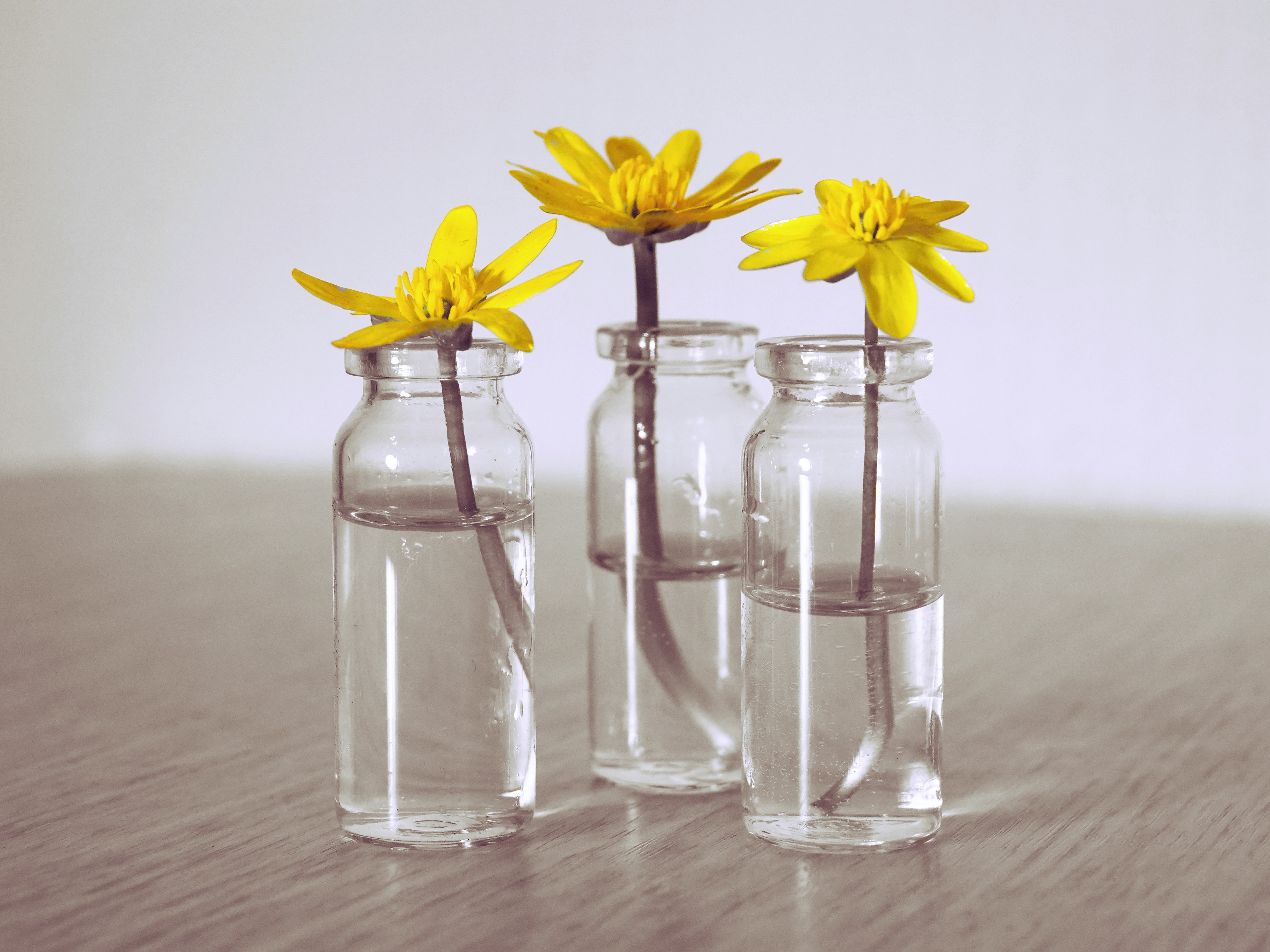
Congratulations! You have now successfully grown plants in your home. Have you wondered how to make an additional plant from your existing one? It is not difficult, and you can do it at home with ease. Plants are all very similar, and once they adapt to your environment, they will continue to grow strong, given that they are provided with sunlight, water, and nutrients. Plants can be easily propagated with a pair of clean shear and a water container. Many people will try to sell you vitamins and rooting hormones to help with the cause. In my experience, they can boost the health of your roots and reduce the amount of time needed for them to root. But they are absolutely not necessary. Here are step-by-step instructions on how to propagate your plants and turn your black thumb into a green thumb.
1. Locate nodes on your plants that can sprout.

Picture borrowed from the blog Love That Leaf.
Plant care can be straightforward and fun. And here is a step-by-step guide on how you quickly propagate your plant from the mother plant. See the picture above, and locate the buds of your plants. This is a critical step because you need nodes to build roots and branches. Leaves on their own will not be able to branch, so you may only be able to grow the same leaf forever. Nodes are brown bumps that you see, usually underneath the leaves or in the middle of the stem. Most plants have very similar construction. The nodes are the area where roots and new branches can form. When a plant senses that it needs to sprout to create additional structures, either root systems or leaves, to help support the entire livelihood, it will shoot sprout through these nodes. People can grow sugar canes that are bought from a grocery store. Place them into the water with the node facing downward, and they will produce a lot of root systems.
2. Cut off excessive leaves.

After locating the nodes, you should cut off the excessive neighboring leaves and a branch from the mother plant at a 45-degree angle. Never cut the branch horizontally because it limits the surface area and reduces the ability of the cut-off stem to grow roots. Use a clean shear; some people may even suggest cleaning the shear with rubbing alcohol and allowing air dry before cutting. The goal is to have a long enough stem to be put into a jar filled with water. You do not want leaves to be soaked in water as they can die and disintegrate. Also, you try to limit the number of leaves when you are propagating plants. You should not leave more than three leaves on the stem because leaves are very high maintenance. They require a lot of nutrients from the water to maintain them. To grow a healthy and lush root system, you should minimize the number of leaves in your propagated plants.
3. Place the node and the stem into water.
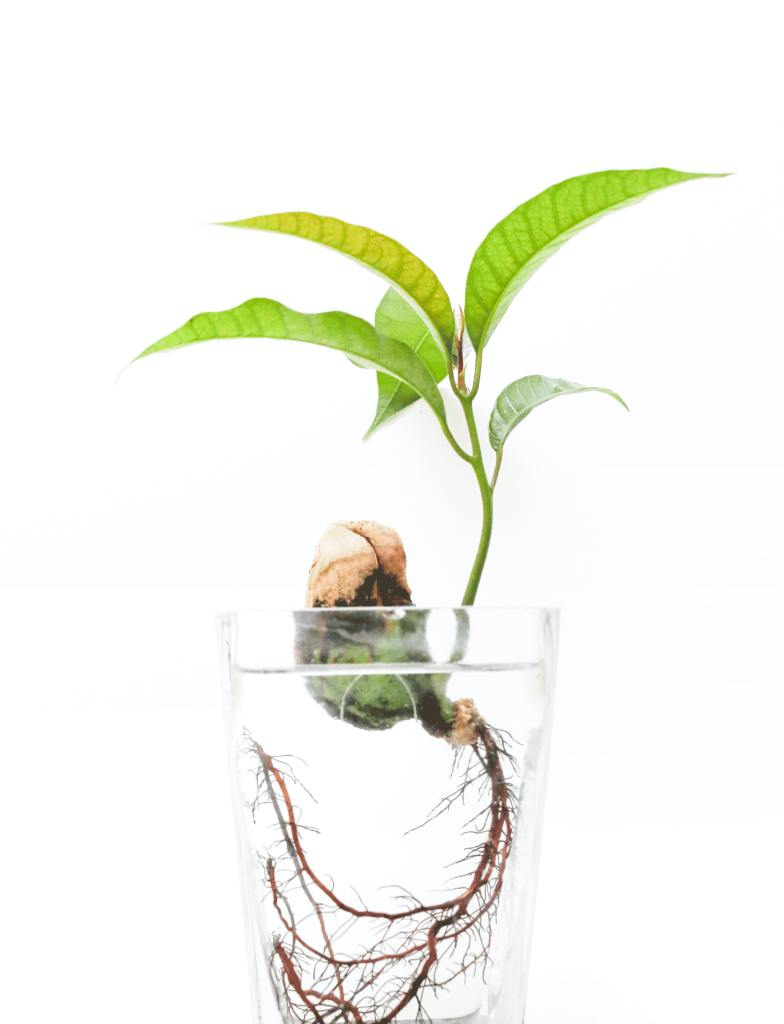
After cleaning the stem and leaves, you should place the plant into water, as shown in the picture above. You will need a propagation station. Most people like to use a mason jar, but you don’t need a fancy station (Link below). You can even use a water bottle! Make sure to clean your bottle well before putting plants into them. You can add rooting hormone if you want to (link below). These are commercially available minerals that you can use to boost the growth of hair roots. But this is not a must-buy. The entire process will take about two to three weeks for roots to grow at the bottom of your plant. There are two types of root systems: soil and water. Water roots are roots that are white and thin. They do not fare well when being placed in soil. Please wait until the brown roots come along; then you can start thinking about putting them into a soil mix and a nursing pot. I also recommend distilled water or reverse osmosis water for this process. Your tap water may have too many calcium and magnesium minerals, and plants don’t root well in a water environment rich in limestone. I exchange the water with fresh RO water every five days for all plants.
4. Wait until it grows hair roots.
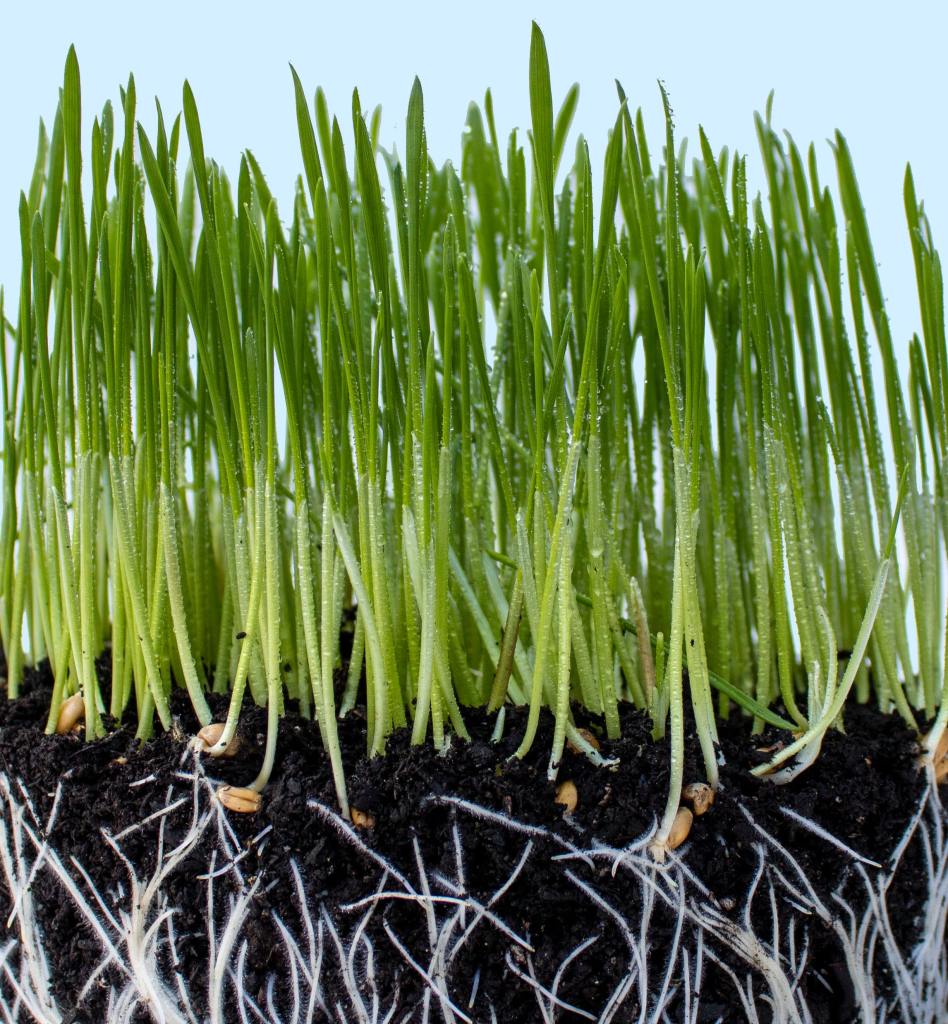
As mentioned before, you want to wait until hair roots to grow. This process will take two to three weeks, depending on the plants you are trying to propagate. I have successfully used plain distilled RO water with no rooting hormone. It took me two weeks to start seeing hair root development in peperomia and ficus plants. Make sure to place your propagation station in an area with ample direct sunlight, and they will grow even faster. I like using grow light on all my houseplants as all plants tend to have giant foliage with sufficient sunlight. Despite popular beliefs on the internet, most households do not carry enough sunlight, even in the brightest spot in their home. Observe your root; eventually, they will turn brown, which is the signal for you to start potting into a soil mix nursery pot. Some may even build extra leaves before that happens.
5. Plant into the soil with the right size pot.
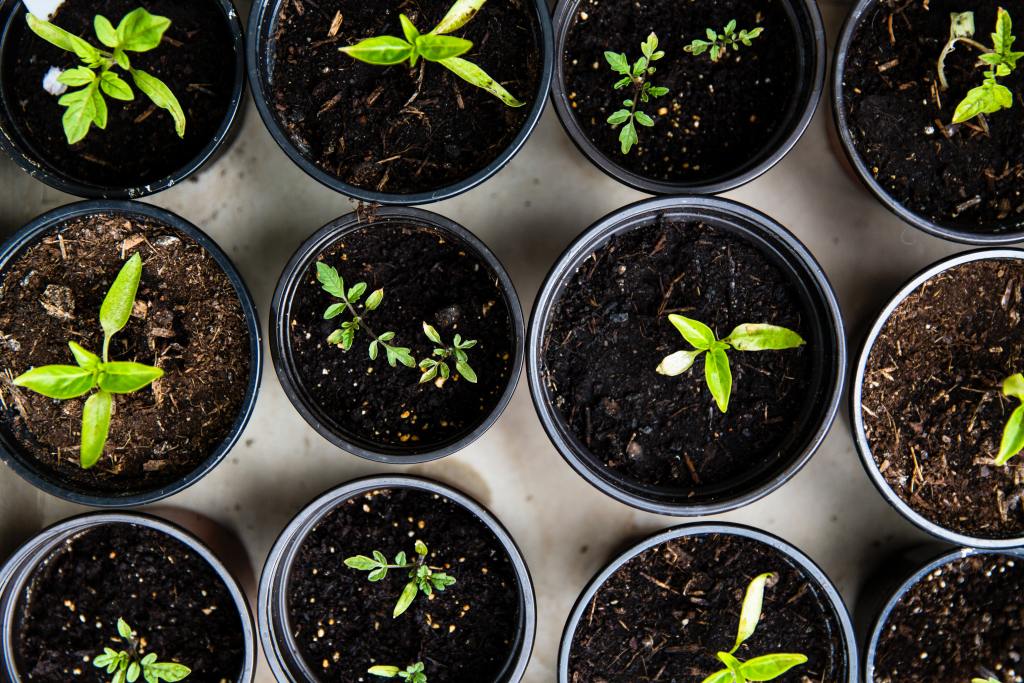
The final step is here! This is the most exciting day in your propagating career. You see brown roots, and your plants have enough hair roots to be potted. I recommend starting with a 4-inch small nursery pot since most hair roots can be pretty small. They also need a significant amount of time to adjust, and you do not want to place your plants into a nursery pot that is too big. An oversized nursery pot tends to develop root rot because of the extra moisture that is not well aerated. It tends to grow bacteria and fungus, which will eat away at your healthy root system. Buy a well-draining soiling mix with perlite can help with this situation. I like to use Espoma soil mix, and I have had tremendous success. After you potted the plant, make sure to water the soil to allow it to settle in and provide ample sunlight.
I hope this article has been helpful! Thank you so much for reading. Please comment, like, and subscribe if you like the content like this. Happy plant-keeping!.
Check out my favorite collection of plant equipment:
Terracotta pots for fast-draining soil: https://amzn.to/3lyiVCd
Propagation station for baby plants: https://amzn.to/3LAsbk0
Stylish water meter to avoid over and under-watering: https://amzn.to/3MDR4fU
Best fast-draining Espoma soil for indoor plants: https://amzn.to/3GalDYb
Aspect grow light: https://amzn.to/39Js6Nq
Buy this water softening system if you want to DIY: https://amzn.to/3NduDOr
Measure your water hardness with this TDS meter: https://amzn.to/3Pi8Rei
Rooting hormone: https://amzn.to/38V1zwP